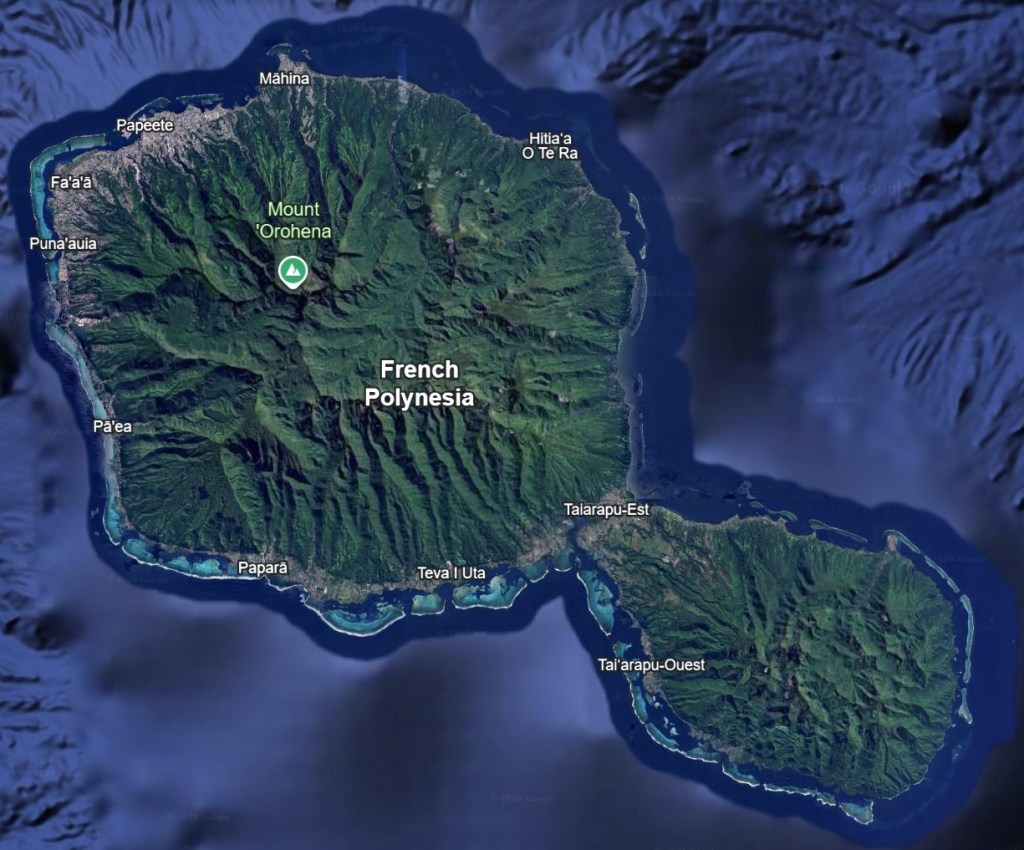
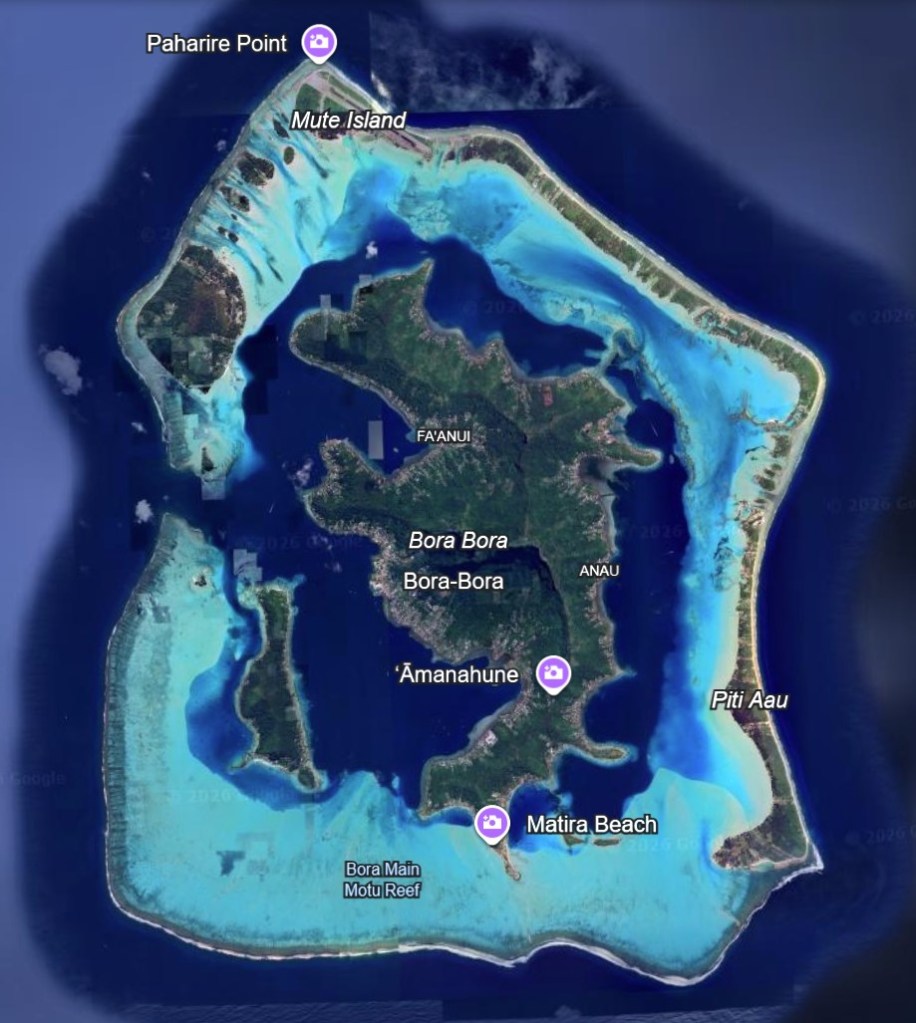
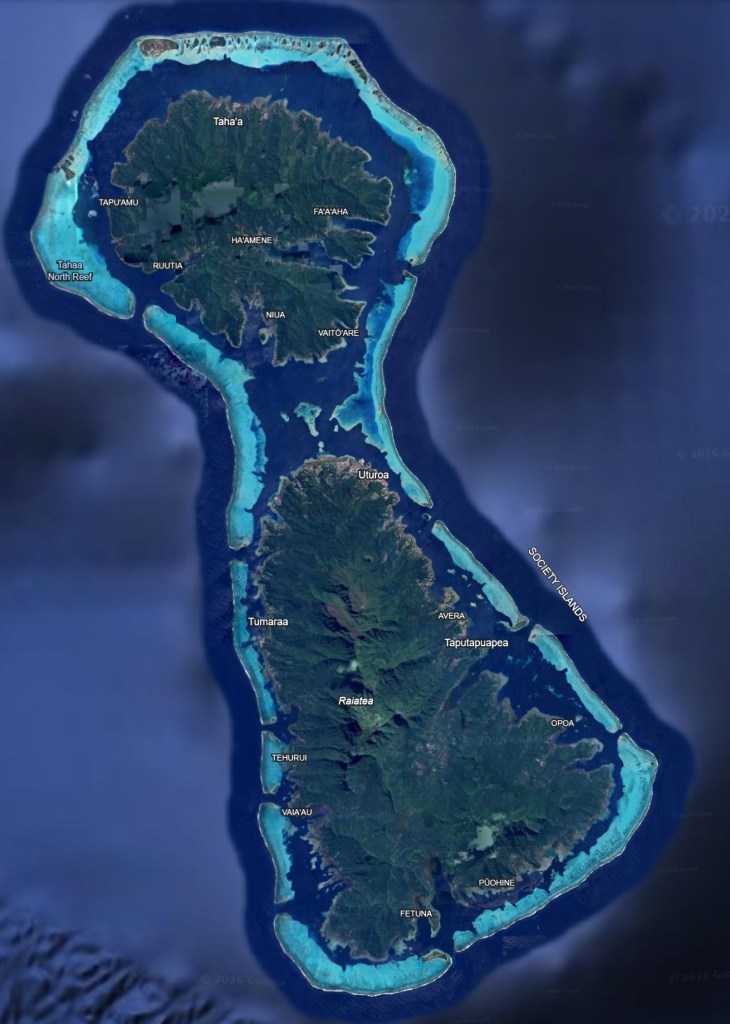
Pikinni atoll
The ocean is scattered with tiny slivers of land, thrown down by god with all the alacrity of a winning craps game. Why, in such a cruel and unforgiving world, would she grace us with such beautiful tropical lagoons? The truth is simple, yet provides another example of how all life on earth is an interconnected mesh that we are doing our best as a species to destroy.
It was the titular SpongeBob SquarePants who initially drew my attention to these ocean oases. As has been discussed by hundreds – if not thousands – of various TikTok, YouTube shorts, and reddit posts, the sponge’s hometown of Bikini Bottom rests just beneath the radioactive waves of Bikini Atoll (Pikinni Atoll in the native Marshallese). The real life location of US nuclear testing in the 20th century. Nuclear testing which presumably resulted in the mutation of the various sea creatures in the SpongeBob canonical universe. (Fun fact, you can actually see bikini bottom on Google Maps if you squint hard enough).
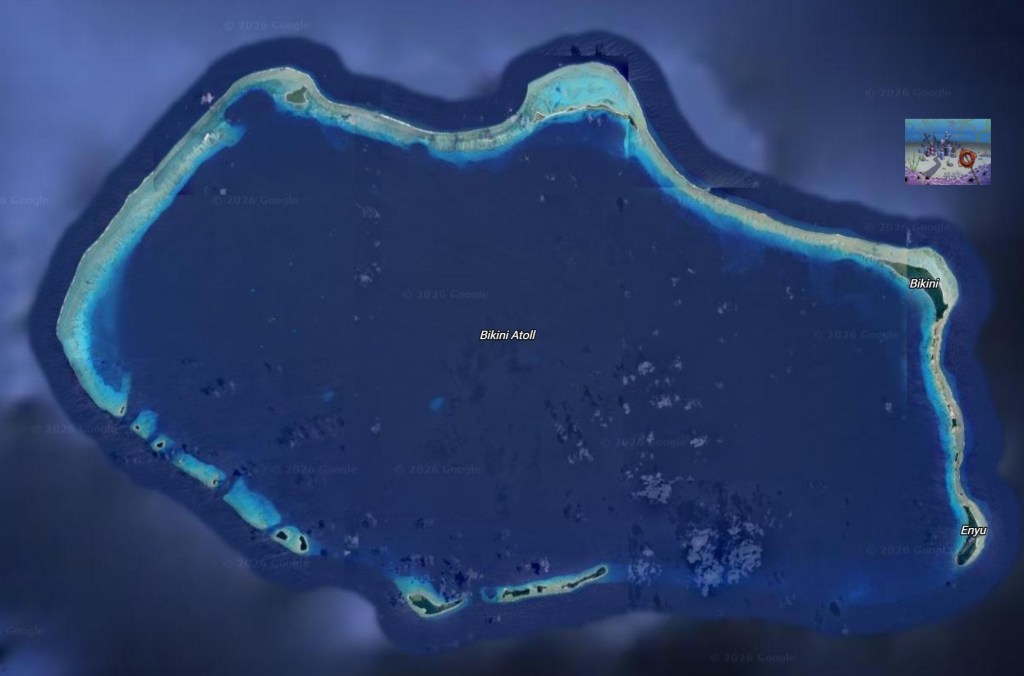
This then begs the question: prior to these nuclear tests, was Bikini Atoll once Bikini island? Did the US, among it’s many crimes committed against the people of the Marshall islands, vaporize an entire island? The obvious answer is no, it would take more than 23 nukes vaporize a 229-square-mile island (about 3 1/2 Staten Islands). There was however, once upon a time, a Bikini Island. An island that actually was destroyed, but not by the paltry power of nuclear weapons. It was destroyed by the unstoppable force that has carved through landscapes and melted mountains, the power that has shaped our world over all it’s 4.5 billion years.
Where do all these islands keep going?

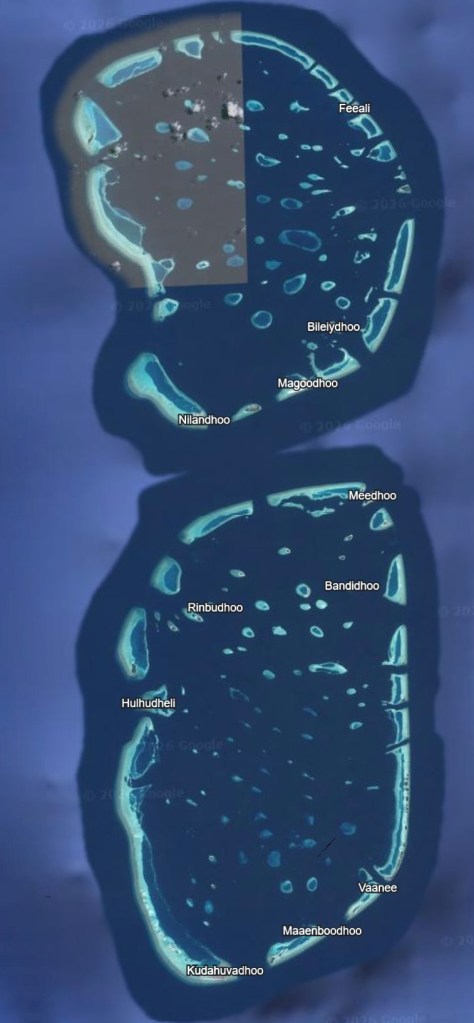
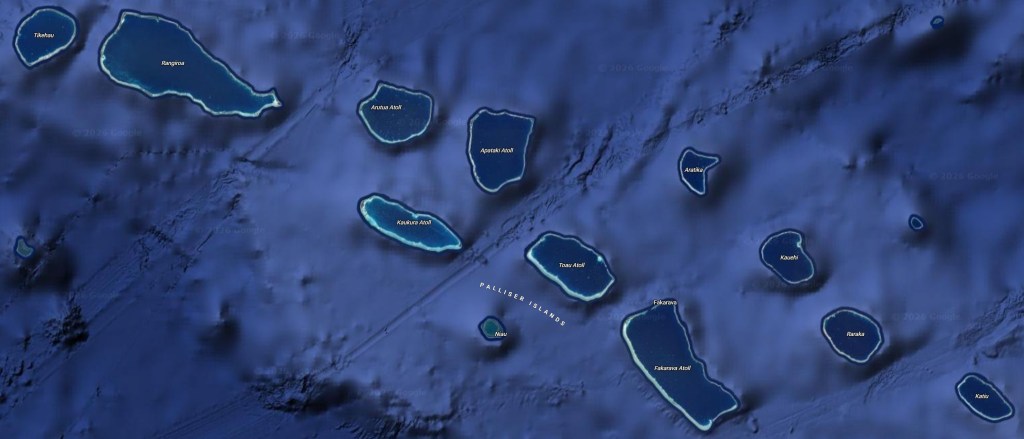
If you’ve ever been fortunate enough to take a tropical vacation to the Maldives or French Polynesia, you’ve likely been unaware that you’re kicking back and soaking up the sun at the crime scene of a murder most foul. To understand the murder, we must first take a look at the victim prior to death.
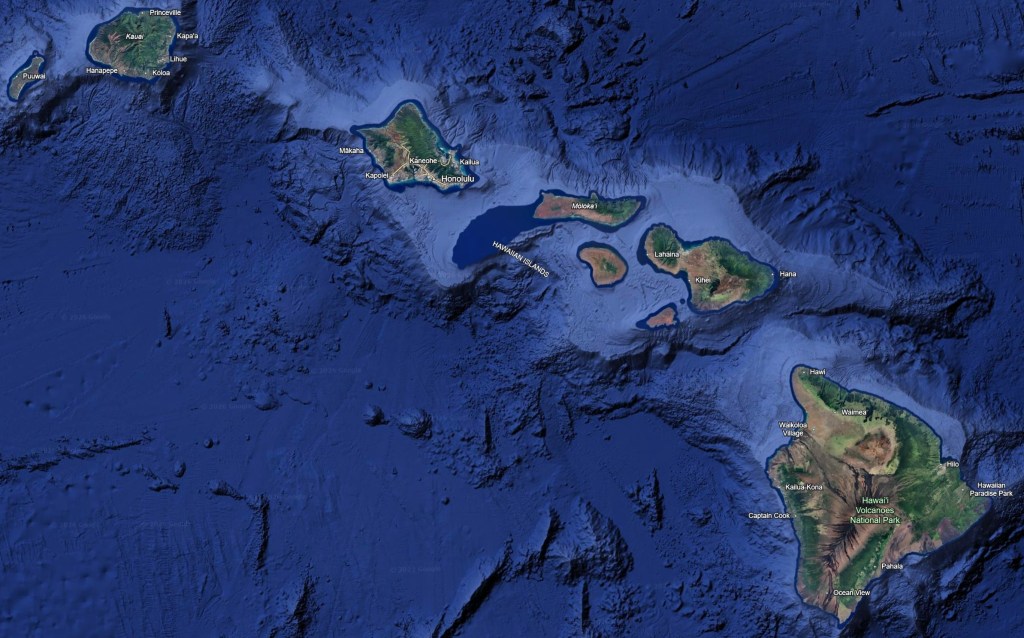
The existence of islands is curious as it is. Why, in the middle of such a vast expanse as the Pacific Ocean, are there so many pinpricks of land? That’s a trick question, it says volcano right there in the picture. Hotspots of magma push through the Earth’s crust and give birth to volcanic islands all across the ocean.
Even for something so seemingly sturdy as land, the miracle of life does not last forever. As all tempers must cool, so too does the earth’s. Once the eruption stops so does growth, and then the rain and wind begins eating away at the earth, casting it back into the ocean from which it rose. At the same time, the the magma chamber which fed the eruption begins to empty, and land begins to subside. With all these factors working against it, the island begins to shrink, and it continues to do so until not a single stone rests above the surface. A process that takes even longer than it took me to finish reading A Little Life, and that must be almost as excruciating. Yet at the same time, this death gives birth to new life.
from the ashes, fishes
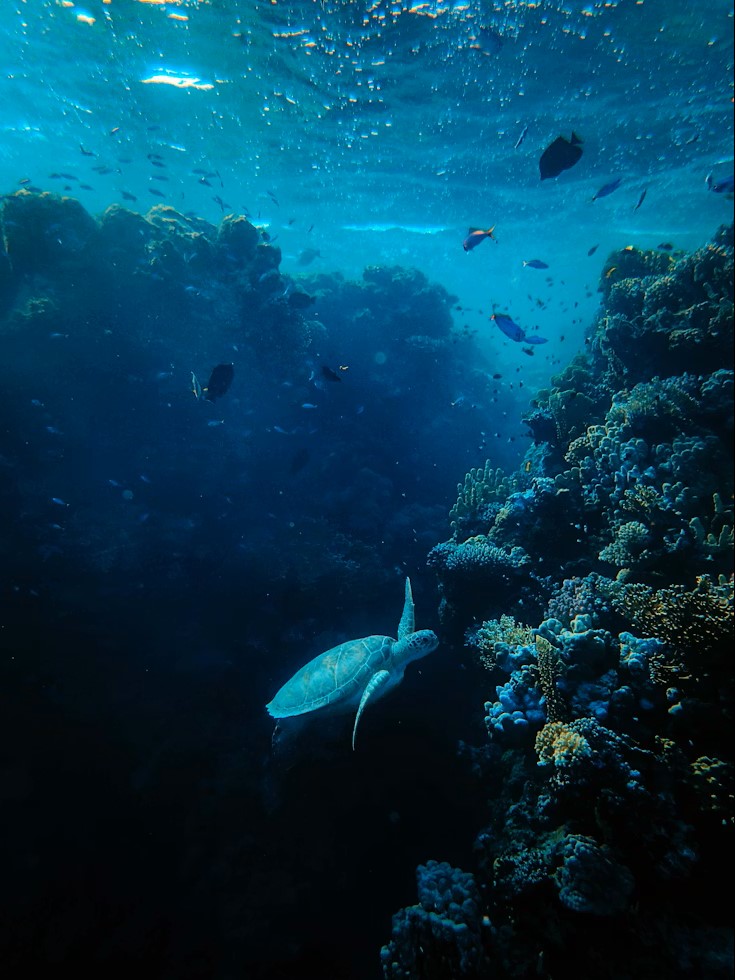
The earth dies, but it does so slowly. Each century, as the island shrinks, a barrier reef begins to grow in the surrounding shallows. The coral grows, layer upon layer, at a similar rate to the sinking of the earth, keeping the shallows alive while the central island recedes. The creates a stark contrast in the ocean, an island married to the sea by a ring. A ring teeming with life.
This process is only possible in tropical waters, reliant on the slow growth of coral. If the land sinks too quickly, the coral growth cannot keep up, and the fragile creatures are drowned in the darkness. This also means atolls are relegated to tropical waters. You’ll never find these beautiful structures in the arctic, or even in the temperate waters